In the world of cryogenic air separation, it is easy to get caught up in complex machinery—compressors, turbines, heat exchangers—and forget the core science behind it all. But no matter how advanced the equipment, cryogenic processes are still grounded in the laws of thermodynamics.
The First Law: Energy Conservation
This law tells us that energy cannot be created or destroyed—only converted from one form to another. In a cryogenic air separation unit (ASU):
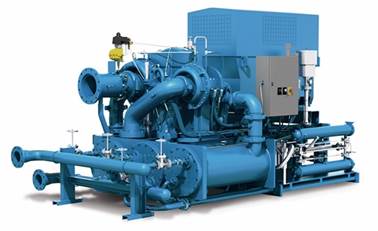
- The main energy input comes from the feed air compressor.
- That energy is transformed into cooling, enabling the separation process.
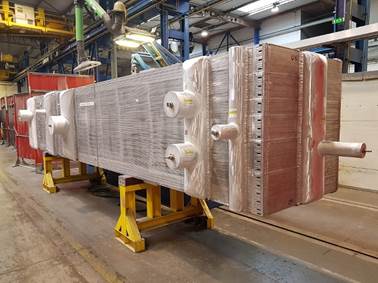
- The main heat exchanger plays a key role by transferring heat between the incoming air and the outgoing product and waste gases.
The Second Law: Efficiency and Irreversibility
This law explains that heat cannot move from cold to hot without external work, and every real process involves some energy loss. In cryogenic systems:
- Processes like gas compression and expansion introduce irreversibilities—these increase entropy and reduce system efficiency.
- By analyzing exergy (the quality of energy), engineers can identify where losses occur and how to reduce them.
The Third Law: The Limits of Cooling
The third law says that as a system approaches absolute zero, its entropy approaches a constant minimum. Cryogenic processes do not reach absolute zero, but they operate at very low temperatures:
- While we cannot achieve absolute zero, understanding this limit helps in designing systems that work effectively under extreme cold conditions.
Source
Kerry, F. G. (2007). Industrial Gas Handbook: Gas Separation and Purification. Boca Raton: CRC Press.

 Evan Grady Wiyono
Leave a comment